Customer Hotline:
+1 6193853151
 Customer Hotline:
+1 6193853151

Product catalog
Related articles
Detailed Introduction
background:
Chondrocytes
have certain cell activity and can participate in the repair and regeneration
of cartilage tissue to respond to external stimuli and damage. In medical
research, chondrocytes can be used to study and treat diseases related to
cartilage damage and loss, such as osteoarthritis, cartilage defects, and
trauma. In addition, chondrocytes can also be used to make artificial organs,
such as artificial ears, noses, joints, etc. They can also be used to screen
drugs and study pharmacology, as well as to study the effects and mechanisms of
autoimmune diseases on cartilage tissue.
The chemical name of collagenase is collagenase, which can cleave the bond
between the neutral amino acid X and glycine, and its sequence is
Gly-XY-Gly-XY, which is found frequently in collagen. It can specifically
hydrolyze the three-dimensional helical structure of natural collagen under
physiological pH and temperature conditions, such as skin, tendons, blood
vessels and bones, without damaging other proteins and tissues. Collagenase
decomposition is applicable to the culture of human tumors, mouse kidneys,
human adult and fetal brains and many other tissues including epithelial cells.
The chemical nature of collagenase is a protein. Therefore, it is very
sensitive to temperature, pH and various factors that cause protein
denaturation. It is easily affected by external conditions and changes its own
conformation and properties. Thermolysin is a heat-stable metalloprotease. High
digestion temperature acts as a selective denaturant to promote the digestion
of proteins that are resistant to proteolysis. Thermolysin preferentially
cleaves at the N-terminus of hydrophobic amino acid residues, including
leucine, phenylalanine, valine, isoleucine, alanine and methionine. Its optimal
digestion temperature range is between 65-85°C. The optimal pH range for thermolysin enzyme
activity is 5.0-8.5.
Overview:
Rhinogen ® recombinant collagenase (recombinant collagenase G and recombinant
collagenase H) is derived from Clostridium histolyticum and is produced by
recombinant expression in the E. coli system. It can be used for the
dissociation of different functional cells and has the characteristics of high
purity, good stability, small batch-to-batch variability and no animal origin.
The two collagens, recombinant collagenase G and recombinant collagenase H, can
be mixed into a specific formula for each application.
Recombinant collagenase H and thermolysin can be mixed for the separation of
chondrocytes.
application:
Applied to the isolation of chondrocytes.
Reagent packaging:
|
Product Name |
Part Number |
Specification |
|
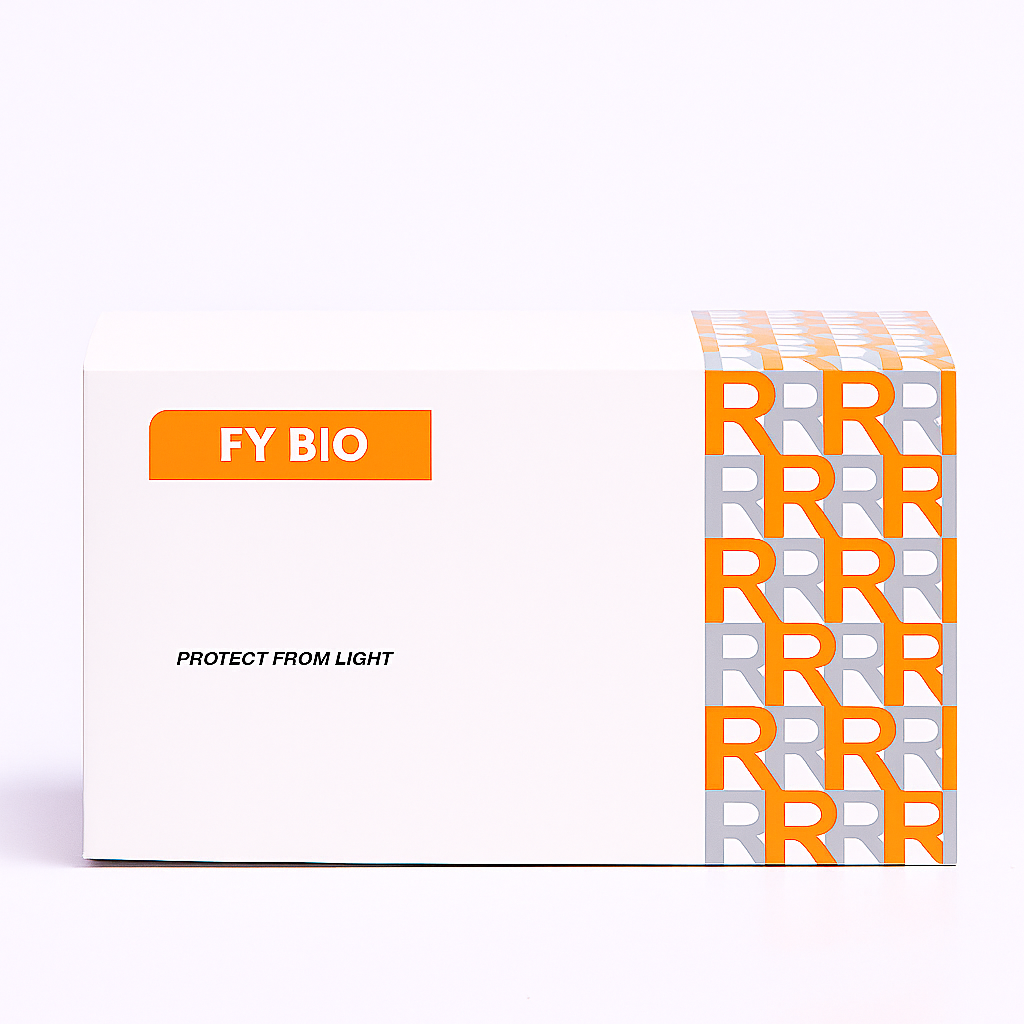
Chondrocyte Isolation Kit |
RA-COL10 |
1kit |
|
Kit Components |
||
|
Recombinant collagenase H |
RA-COL04-F |
900U |
|
Thermolysin |
RA-COL05-G |
750μg |
Product Features:
1. High
purity: >95%, no
contaminating protease, can reduce over-digestion;
2. High adaptability: adjust the collagenase digestion rate according to
the experimental application;
3. No animal origin: recombinant production, no exogenous virus
contamination, and no animal origin raw materials are used in the production
process;
4. High stability: each batch of products undergoes strict quality control
to achieve product batch-to-batch stability ;
5. Low endotoxin: no side effects on cells.
Storage conditions:
Transport with ice packs, store at -20℃, and seal to prevent moisture. After reconstitution, please divide into portions according to the single use amount and store at -20℃ to avoid repeated freezing and thawing.