Customer Hotline:
+1 6193853151
 Customer Hotline:
+1 6193853151

Product catalog
Related articles
Detailed Introduction
Mycoplasma is a general term for prokaryotic microorganisms of the Mycoplasma, Acholesteroplasma and Spiroplasma families . It is the smallest known free-living organism with no cell wall, variable shapes, a diameter of 0.1 to 0.3 μm, a high AT content in the genome, insensitive to common antibiotics, and sensitive to heat. At present, about 200 species of mycoplasmas have been found in sewage, plants, animals, poultry, insects, humans, hot springs or other high-temperature environments.
If cells are contaminated with mycoplasma, the cell growth rate slows down, and the cells develop lesions or morphological changes. The probability of continuous culture cell contamination is about 15-35%, mainly from more than 20 types of mycoplasma, including oral mycoplasma ( M.orale ), pneumonia mycoplasma ( M.pneumoniae ), fermentation mycoplasma ( M.fermentans ), arginine mycoplasma ( M.arginini ), laidlawii ( A.laidlawii ) and hyorhinis mycoplasma ( M.hyorhinis ) .
Human operations, contaminated cells, raw materials and auxiliary materials (serum, trypsin, culture medium), experimental environment pollution (biosafety cabinets, cell rooms, incubators), experimental instruments (water baths, liquid nitrogen tanks), and experimental consumables (culture dishes, square bottles, cell factories) may all be sources of contamination. On the one hand, contaminated cells have a huge impact on production. On the other hand, if cell products, protein products, and virus products are contaminated with mycoplasma, they will eventually bring potential health risks to patients. Therefore, regulatory authorities require companies to conduct mycoplasma testing on cell banks, test cells, and products, control them from the source, detect them as early as possible, and ensure that released products do not contain mycoplasma. In response to this, drug regulatory authorities in countries around the world have also issued relevant guidelines for mycoplasma testing. The detection methods mainly include POCT, fluorescent staining, culture, nucleic acid amplification and other detection methods.
Overview:
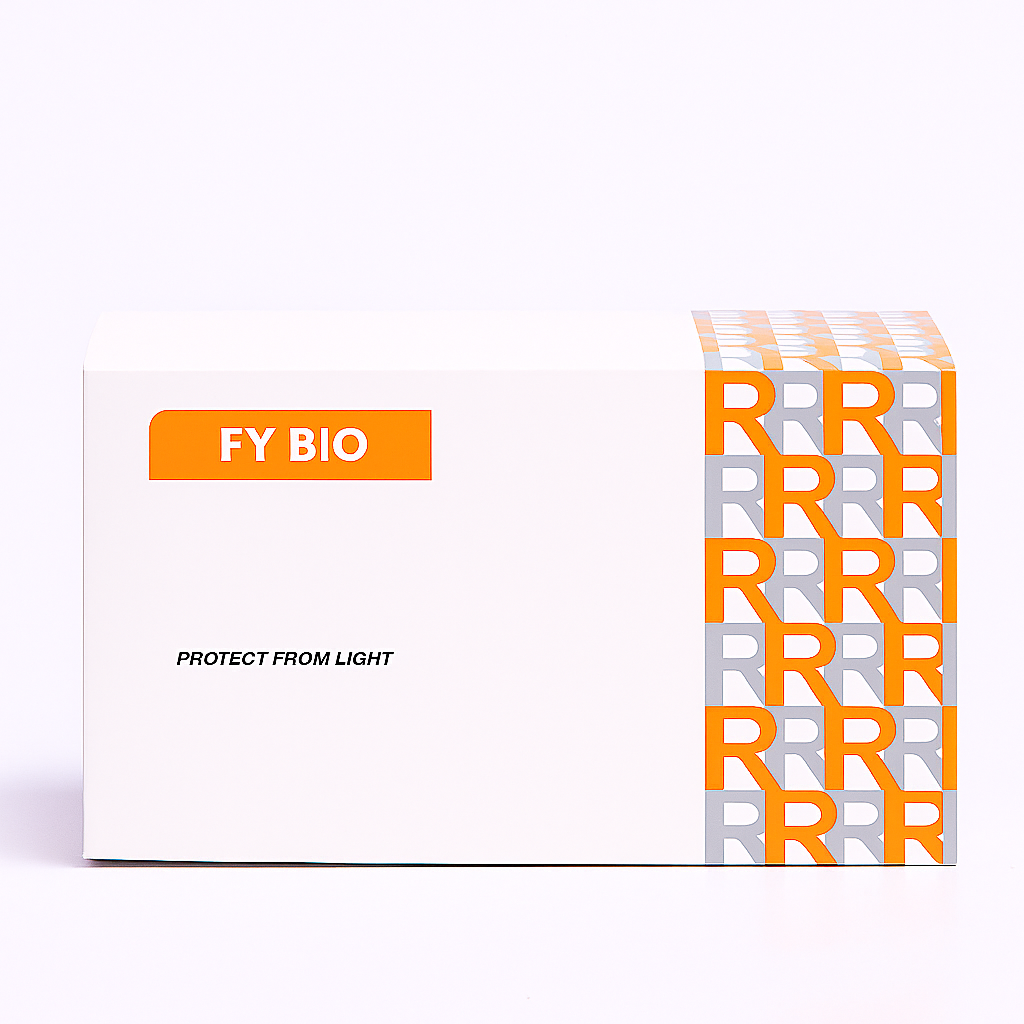
Rhinogen ® Myco- Farbe ™ Rapid Mycoplasma Detection Kit is a reagent for rapid detection of mycoplasma contamination in cell culture. It is simple and convenient to use. Just pipette 1μl of cell culture supernatant into the reaction system, incubate at 65℃ for 1 hour, and the result can be determined by naked eye observation. No PCR/qPCR instrument or electrophoresis is required, and it can be easily completed in the cell room. The test results are highly consistent with the most sensitive and accurate qPCR method currently available. This kit can detect up to 62 types of mycoplasmas, including 8 common mycoplasmas in cell culture; it is suitable for various suspension and adherent culture cells, including CHO, Vero, hybridoma, Sf9, 293, etc., and has a wide range of culture medium compatibility, so it is very suitable for daily mycoplasma detection in biopharmaceutical companies, vaccine manufacturers, monoclonal antibody manufacturers, cell therapy/embryo laboratories and scientific research laboratories.
Reagent packaging:
the Rhinogen ® Myco- Farbe ™ Rapid Mycoplasma Detection Kit are as follows:
|
Reagent components |
Part Number |
Specification |
|
|
25T |
50T |
||
|
Myco- Farbe ™ Assay Buffer |
RA-MT12A |
610μl |
2 × 610 μl |
|
Myco- Farbe ™ Detection Enzyme |
RA-MT12B |
28μl |
2 × 28 μl |
|
Positive Control |
RA-MT12C |
10μl |
2×10μl |
|
Mineral oil |
RA-MT12D |
690μl |
2 × 690 μl |
Product Features:
1. Simple operation: It only takes 60 minutes to detect whether there is mycoplasma contamination in cell culture;
2. High specificity: will not be interfered by bacteria, fungi, and yeast;
3. Low pollution: The reaction is carried out in the tube, and there is no need to open the cover for testing after the reaction, which reduces the risk of contamination;
4. High detection sensitivity: can detect at least 500 cfu of mycoplasma.
Storage conditions:
1. Use ice packs for transportation and store at -20℃ for long term upon arrival. Try to avoid repeated freezing and thawing.
Please return the reagent to room temperature before use .
Frequently asked questions
Q1: How many hours of incubation does it take for the color to change? Is it negative or positive?
A1: 1) The kit is a colorimetric reaction. If the color development is unstable after more than 60 minutes, the credibility of the result will decrease. 2) If the cells are suspected of being contaminated with mycoplasma, the cells can be passed for 2-3 generations and then re-tested. If no color development is observed after 60 minutes of re-testing, it means that there is no mycoplasma contamination. 3) This kit can detect common mycoplasma species that contaminate cells. For a small number of important cells that are suspected of being contaminated with unidentified mycoplasma species, it is recommended to use Rhinogen ® MycoAlarm ™ Mycoplasma Detection Kit (RA-MT01) performs dual detection. Strict mycoplasma detection requires the use of two or more different methods to detect simultaneously in order to more effectively avoid false positives and false negatives.
Q2: How to avoid false positives during the operation?
A2: 1) Wear a mask, gloves and lab coat during experimental operations; 2) Isothermal amplification is an ultra-high sensitivity test. Please try to perform the test in a standard PCR laboratory; 3) Pay attention to replacing the gun tip when adding samples. It is recommended to add the positive control to the last tube ; 4) After the reaction is completed, the tube cap cannot be opened, otherwise the reaction product is very likely to produce aerosol contamination; 5) After judging the results, seal it and dispose of it according to the laboratory waste disposal requirements.
Q3: Is there a color difference after adding the sample?
A3: This product contains a color indicator, and the sample cannot contain high concentrations of metal ion chelators such as EDTA. Before the reaction, if the color after adding the sample is significantly different from the negative and positive colors, it is necessary to dilute the sample or adjust the pH of the sample to near neutral. You can also use the Rhinogen ® Myco-EXT™ Mycoplasma DNA Extraction and Purification Kit (RA-MT04) to process the sample.
How many types of mycoplasma can the kit detect ?
A4: Mycoplasma species that can be amplified by this kit:
|
Acholeplasma laidlawii |
Mycoplasma citelli |
Mycoplasma lipophilum |
|
Mycoplasma arginini |
Mycoplasma cloacale |
Mycoplasma maculosum |
|
Mycoplasma fermentans |
Mycoplasma columbina |
Mycoplasma meleagridis |
|
Mycoplasma hominis |
Mycoplasma columbinum |
Mycoplasma moatsii |
|
Mycoplasma hyorhinis |
Mycoplasma cricetuli |
Mycoplasma mobile |
|
Mycoplasma orale |
Mycoplasma crocodyli |
Mycoplasma neophronis |
|
Mycoplasma pirum |
Mycoplasma cynos |
Mycoplasma neurolyticum |
|
Mycoplasma salivarium |
Mycoplasma edwardii |
Mycoplasma opalescens |
|
Acholeplasma granularum |
Mycoplasma falconis |
Mycoplasma pneumoniae |
|
Acholeplasma oculi |
Mycoplasma felifaucium |
Mycoplasma primatum |
|
Acholeplasma pleciae |
Mycoplasma gallinarum |
Mycoplasma procyoni |
|
Mycoplasma agalactiae |
Mycoplasma gallisepticum |
Mycoplasma pullorum |
|
Mycoplasma agassizii |
Mycoplasma gallopavonis |
Mycoplasma pulmonis |
|
Mycoplasma alkalescens |
Mycoplasma genitalium |
Mycoplasma simbae |
|
Mycoplasma alvi |
Mycoplasma hyopharyngis |
Mycoplasma spermatophilum |
|
Mycoplasma arthritidis |
Mycoplasma hyosynoviae |
Mycoplasma sphenisci |
|
Mycoplasma auris |
Mycoplasma iguanae |
Mycoplasma synoviae |
|
Mycoplasma bovigenitalium |
Mycoplasma iners |
Mycoplasma testudineum |
|
Mycoplasma bovis |
Mycoplasma lagogenitalium |
Mycoplasma timone |
|
Mycoplasma canadense |
Mycoplasma leopharyngis |
Ureaplasma urealyticum |
|
Mycoplasma caviae |
Mycoplasma lipofaciens |
Note: The black labels are the most common types in cell culture.