Customer Hotline:
+1 6193853151
 Customer Hotline:
+1 6193853151

Product catalog
Related articles
Detailed Introduction
background:
Mycoplasma
is a general term for prokaryotic microorganisms of the Mycoplasma family, the
Acholesteroplasma family , and the Spiroplasma family. It is the smallest known
free-living organism, has no cell wall, has a variety of shapes, is generally
0.1-0.3 μm in
diameter, has a high AT content in the genome, is insensitive to common
antibiotics, and is sensitive to heat. At present, about 200 species of
mycoplasmas have been found in sewage, plants, animals, poultry, insects,
humans, hot springs, or other high-temperature environments.
If cells are contaminated with mycoplasmas, the cell growth rate slows down,
and the cells develop lesions or morphological changes. The probability of
continuous culture cell contamination is about 15-35%, mainly from more than 20
species of mycoplasmas, including oral mycoplasma ( M.orale ), pneumonia
mycoplasma ( M.pneumoniae ), fermentation mycoplasma ( M.fermentans
), arginine mycoplasma ( M.arginini ), A.laidlawii ( A.laidlawii ),
and hyorhinis mycoplasma ( M.hyorhinis ).
Human operation, contaminated cells, raw materials (serum, trypsin, culture
medium), experimental environment pollution (biosafety cabinet, cell room,
incubator), experimental instruments (water bath, liquid nitrogen tank),
experimental consumables (culture dish, square bottle, cell factory) may all be
sources of contamination. On the one hand, contaminated cells have a huge
impact on production. On the other hand, if cell products, protein products,
and virus products are contaminated with mycoplasma, they will eventually bring
potential health risks to patients. Therefore, the regulatory authorities
require companies to conduct mycoplasma testing on cell banks, test cells and
products, control them from the source, discover them as early as possible, and
ensure that the released products do not contain mycoplasma. In this regard,
drug regulatory authorities in various countries around the world have also
issued relevant guidelines for mycoplasma detection. The detection methods
mainly include fluorescent staining, culture, biochemical detection methods and
nucleic acid amplification methods. Among the above detection methods, most of
the operation steps are relatively cumbersome, the sensitivity is not high, the
types of mycoplasma cannot be distinguished , special instruments are required,
or the time required is long. The PCR method is relatively simple and
convenient to operate. After PCR amplification, electrophoresis analysis can be
used to determine whether there is mycoplasma contamination. At least 11
contaminating mycoplasma species can be roughly predicted based on the size of
the amplified fragment. The PCR product can also be further sequenced to
determine the specific mycoplasma species.
Overview:
Rhinogen ® Myco- Acid TM The PCR Mycoplasma Detection Kit is a detection kit that uses the Nested PCR method to detect whether there is mycoplasma contamination in biological materials such as cultured cells. This Mycoplasma Detection Kit uses two pairs of primers to specifically amplify the mycoplasma genomic DNA fragment through the Nested PCR method, thereby achieving highly sensitive and specific detection of mycoplasma.
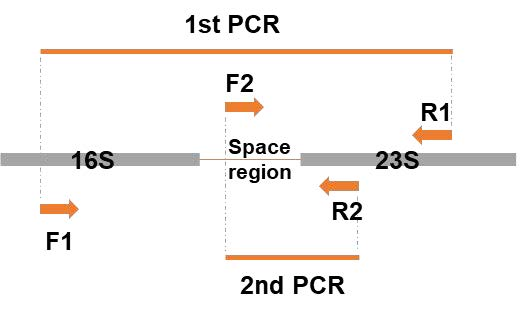
Figure 1. Rhinogen ® Myco- Acid TM Detection principle diagram of PCR mycoplasma detection kit
This kit provides PCR Mix (including Taq DNA Polymerase, PCR Buffer, dNTP and Loading Buffer). After amplification, the sample can be directly loaded for electrophoresis , which can detect mycoplasma contamination quickly, effectively and with high sensitivity. The matching positive control makes it easy to determine whether the PCR test can work properly and whether there are substances in the sample that inhibit the PCR reaction. The rRNA base sequence of prokaryotes is very conservative, and the base sequence of the DNA spacer region (space region) encoding rRNA on the rRNA operon varies greatly among various biological species, such as the spacer region between 16S and 23S. The DNA sequence and length of this spacer region have both very conservative parts and large differences among various species of mycoplasma. A pair of F1/R1 primers are designed on the conserved region DNA encoding 16S and 23S to amplify the spacer region between 16S and 23S. This is the first round of PCR (1st PCR) of nested PCR, which is used to preliminarily identify whether there is mycoplasma contamination; then an F2 primer is designed on the conserved region of the DNA spacer region encoding 16S and 23S rRNA, and an R2 primer is designed on the DNA encoding 23S rRNA for the second round of PCR (2nd PCR) of nested PCR. Nested PCR can greatly improve the specificity and sensitivity of detection.
application:
The mycoplasma species that can be amplified by this kit and the length of the 1st PCR and 2nd PCR amplification products are shown in the following table:
|
Species |
GenBank |
1st PCR (bp) |
2nd PCR (bp) |
|
Mycoplasma arginini |
JN935883 |
370 |
145 |
|
Mycoplasma arthritidis |
AY973560 |
408 |
157 |
|
Mycoplasma capricolum |
AY800346 |
415 |
221 |
|
Mycoplasma fermentans |
AY816338 |
492 |
195 |
|
Mycoplasma hominis |
AY738737 |
370 |
148 |
|
Mycoplasma hyopneumoniae |
JN935889 |
682 |
238 |
|
Mycoplasma hyorhinis |
AY973572 |
452 |
211 |
|
Mycoplasma neurolyticum |
AY796063 |
502 |
196 |
|
Mycoplasma orale |
AY737010 |
424 |
179 |
|
Mycoplasma pulmonis |
JN935865 |
477 |
190 |
|
Mycoplasma salivarium |
AY786574 |
403 |
151 |
|
Ureaplasma urealyticum |
AY741673 |
482 |
154 |
Reagent packaging:
Rhinogen ® Myco- Acid TM The packaging specifications of the PCR Mycoplasma Detection Kit are as follows:
|
Reagent components |
Part Number |
Specification |
|
25 T |
||
|
PCR Mix |
RA-MT06A |
250μl |
|
Positive Control |
RA-MT06B |
10μl |
|
1st PCR Primer Mix |
RA-MT06C |
10μl |
|
2nd PCR Primer Mix |
RA-MT06D |
10μl |
Product Features:
1. Simple
operation: The kit provides premixed reagents, making the system easy to
prepare and operate;
2. Rapid detection: Mycoplasma detection by PCR amplification and
electrophoresis analysis only takes about 4-5 hours; 3. High sensitivity: The
PCR reaction is very sensitive and can amplify the target gene sequence more
than 10 million times; 4. High specificity: The use of nested PCR reaction
improves the detection specificity.
Storage conditions:
Transported in ice packs, please store at -20℃ or below immediately after receiving the product . Avoid repeated freezing and thawing.