Customer Hotline:
+1 6193853151
 Customer Hotline:
+1 6193853151

Product catalog
Related articles
Detailed Introduction
background:
Vascular Endothelial Growth Factor Growth Factor (VEGF) is a signaling protein that stimulates angiogenesis in cells and has the function of promoting angiogenesis and regeneration. VEGF in cells binds to and activates the vascular endothelial growth factor receptor ( VEGF ) on the cell surface. Growth Factor Receptor (VEGFR, also known as tyrosine kinase receptor), ultimately leading to angiogenesis. There are several subtypes of VEGFR: VEGFR1, VEGFR2, and VEGFR3. VEGFR2 (also known as KDR) mediates the cellular response of almost all known receptors to VEGF. VEGF/VEGFR target antibodies inhibit angiogenesis by specifically binding to VEGF/VEGFR, thereby inhibiting downstream signaling pathways.
The biological activity of monoclonal antibody drugs, as their key quality attributes, has attracted much attention in quality control. The classic method currently used to determine the biological activity of VEGF/VEGFR target antibodies is the HuVEC proliferation inhibition method, whose working cells are primary cells , with a long experimental cycle, large variability and complex operation. In order to ensure the safety and timeliness of medication and meet the needs of quality inspection, it is urgent to establish a simple, rapid and accurate detection method for VEGF/VEGFR target antibody biological activity detection. Rhinogen ® VEGF Reporter Bioassay is a bioluminescent reporter gene detection method, and its mechanism of action (Figure 1) is based on the binding of VEGF to KDR to stimulate cell response. This system uses engineered HEK293 cells as test cells. The cell line stably expresses VEGFR2 and firefly luciferase driven by NF-κB response elements. When VEGF binds to test cells, the receptor transduces intracellular signals to generate light; Anti-VEGF antibodies or Anti-KDR antibodies inhibit the binding of VEGF to KDR, resulting in a decrease in luminescence. Therefore, in the presence of a certain concentration of VEGF, the effects of different blockers (such as Anti-VEGF antibodies) on the VEGF pathway can be detected.
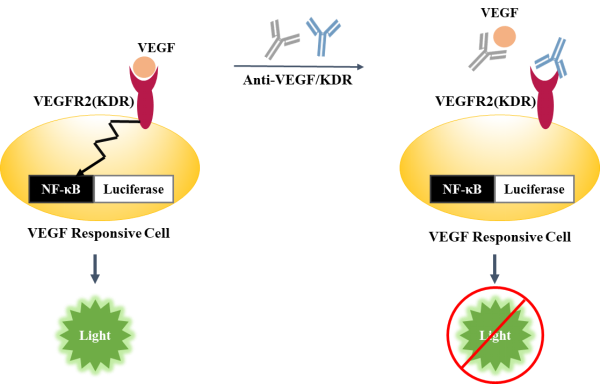
Figure 1. Schematic diagram of the Rhinogen ® VEGF Reporter Bioassay
Specifications:
|
Catalog Number |
Element |
Specification |
|
RA-CK24 |
VEGF Reporter Bioassay (5×10 6 cells/ml) |
1×1ml |
Features:
The Rhinogen ® VEGF reporter gene assay system has the characteristics of easy operation, low variability and good stability.
1. Wide application: It can be used as an effective means for drug screening and detection against VEGF/VEGFR targets;
2. Easy operation: The detection process is simple and the detection reagents are easy to use;
3. Good stability: After 20 passages, the detection can still be stable and sensitive, and the data reproducibility is good.
the Rhinogen ® VEGF reporter gene detection system make it an effective means of screening and testing drugs targeting VEGF. At the same time, this method can be used as a routine detection method for the biological activity of VEGF/VEGFR target drugs and a batch release detection indicator.
Transportation and storage:
Transportation method: dry ice transportation
Storage: Upon receipt of cells, please immediately transfer the cryovials to a temperature below -140°C for long-term storage.