Customer Hotline:
+1 6193853151
 Customer Hotline:
+1 6193853151

Product catalog
Related articles
Detailed Introduction
background :
dependent cell-mediated cytotoxicity ( ADCC ) is an important immune defense mechanism of the immune system against viral infection and tumor diseases. Antibodies specifically bind to antigens on the surface of target cells and recruit effector cells such as natural killer ( NK ) cells to kill target cells . Fc γ RIIIa protein is expressed on the surface of NK cells. It is a receptor of the Fc region of antibodies that can recognize and bind to the Fc end of antibodies, allowing NK cells to bind to the target cells. Once the Fc receptor binds to the Fc region of the antibody, NK cells will release cytokines and cytotoxic particles, enter the target cells and trigger cell apoptosis. The traditional ADCC detection method uses peripheral blood mononuclear cells (PBMCs ) or NK cells isolated from them as effector cells for detection. The effector cells of this method are difficult to obtain, and the method has large variability and cumbersome operation.
Rhinogen ® ADCC Reporter Bioassay is a bioluminescent reporter gene assay used to detect the ADCC biological activity of antibodies. Its mechanism of action is based on the NFAT ( Nuclear factor of activated T-cells ) response pathway (Figure NFAT response element drives the expression of firefly luciferase . Antibodies bind to FcγRIIIa on the surface of effector cells , stimulating the intracellular NFAT response element, which in turn drives the expression of firefly luciferase. Luciferase activity is quantified by bioluminescence .
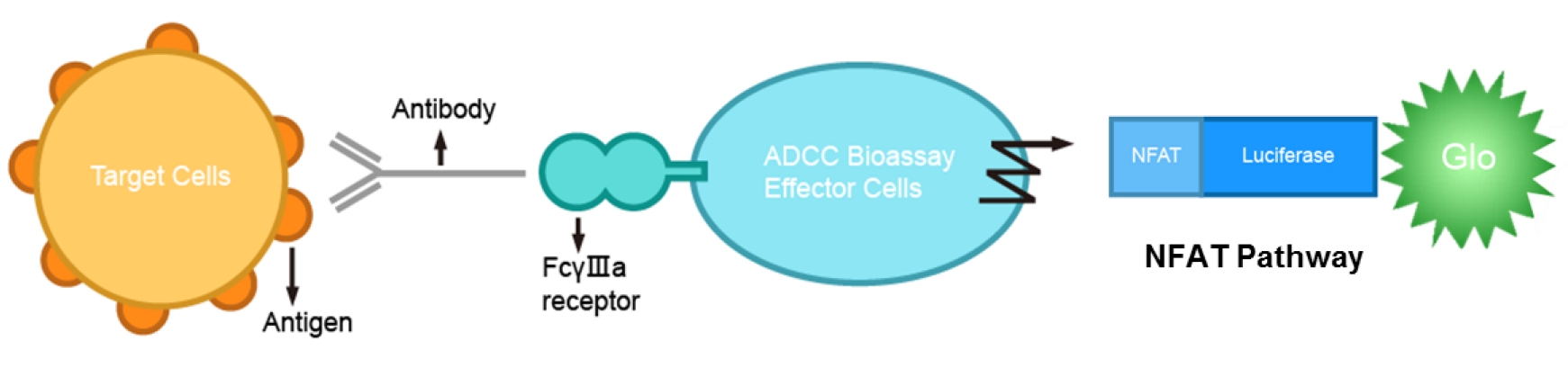
Figure 1. Rhinogen ® ADCC Reporter Bioassay Schematic
Packing Specifications :
|
Catalog Number |
Specification |
|
RA-CK01 |
1×1ml |
Features :
ADCC biological activity detection method provided by the Rhinogen ® ADCC reporter gene detection system has the characteristics of simple operation (Figure 2 ), low variability, high sensitivity, etc., and can be used with a variety of different target cells.
1. Clear principle: based on the activation of the FcγRIIIa receptor signaling pathway of effector cells by antibody-binding cells
2. Widely used: Fc functional research and product quality control of therapeutic antibody drugs , ADCC mechanism research
3. Easy operation: The detection process is simple and the detection reagents are easy to use
4. Wide applicability: The system has been validated for a variety of target cells, either suspended or adherent, with good results
5. High sensitivity: can sensitively detect changes in antibody glycoforms
6. Good stability: stable and sensitive detection can be achieved after 30 passages , and the data reproducibility is good
the Rhinogen ® ADCC reporter gene detection system make it an effective means of studying antibody screening, antibody glycosylation modification, etc. At the same time, this method can be used as a routine detection method for the ADCC activity of antibody drugs and a batch release detection indicator.

Figure 2. Rhinogen ® ADCC Reporter Bioassay Flowchart
Transportation and storage :
Transportation method: dry ice transportation
Storage Storage: Upon receipt of the cells, please immediately transfer the ADCC Bioassay Effector Cell Cryopreservation Tubes to a temperature below -140°C for long-term storage .
Frequently asked questions
Q1 : Why did you choose the NFAT response element? How many overlaps are there when constructing the NFAT response element?
A1 : Our genetically modified host cells, Jurkat T cells, have NFAT signaling pathways in the cells . Our FcγRⅢa receptor can activate the NFAT signal transduction pathway in cells after specifically binding to the Fc region of the antibody , so we chose the NFAT response element. The NFAT response element was constructed without overlap and only had one gene unit .
Q2 : Is the COA document for comprehensive testing of the cell lines used in testing in accordance with the 2015 edition of the Chinese Pharmacopoeia ?
A2 : Yes, we conduct quality control on ADCC live cell lines in full compliance with the requirements of the pharmacopoeia, including sterility inspection (sterility), mycoplasma detection (mycoplasma negative) and functional identification of cells. The COA document of the test will be provided together with the cells.
Q3 : Are there any recommendations for setting the effect-target ratio?
A3 : The specific value of the effect-target ratio must be based on the actual test optimization. In the initial exploration experiment, the effect-target ratio can be set to 1 : 3 , 3 : 1 , 6 : 1 , and further adjustment and confirmation can be made according to the test results. And because the response value will change due to different microplate readers, it is recommended to determine the effect-target ratio again after changing the equipment.
Q4 : Why is the incubation time 6-24 hours during the activity test ?
A4 : The affinity of antibody samples to FcγRⅢa receptors on the surface of ADCC effector cell lines is different, so the optimal incubation time may be different for different antibody samples . We only list a time range here. For specific antibodies, the incubation time needs to be properly optimized.
Q5 : What is the signal-to-noise ratio of the current data on your ADCC detection system?
A5 : Our ADCC detection system is suitable for the biological activity detection of a variety of antibodies with ADCC functional activity. For different antibody samples, the signal-to-noise ratio is different due to the different affinities between the antibody Fc end and FcγRⅢa on effector cells .