Customer Hotline:
+1 6193853151
 Customer Hotline:
+1 6193853151

Product catalog
Related articles
Detailed Introduction
background:
FabCOUPER protease is a serine protease expressed recombinantly in E.coli with a 6×His tag at the C-terminus . It can specifically digest human IgG1 at a single site above the hinge and produce intact Fab and Fc fragments within two hours without reducing conditions.
Packing Specifications:
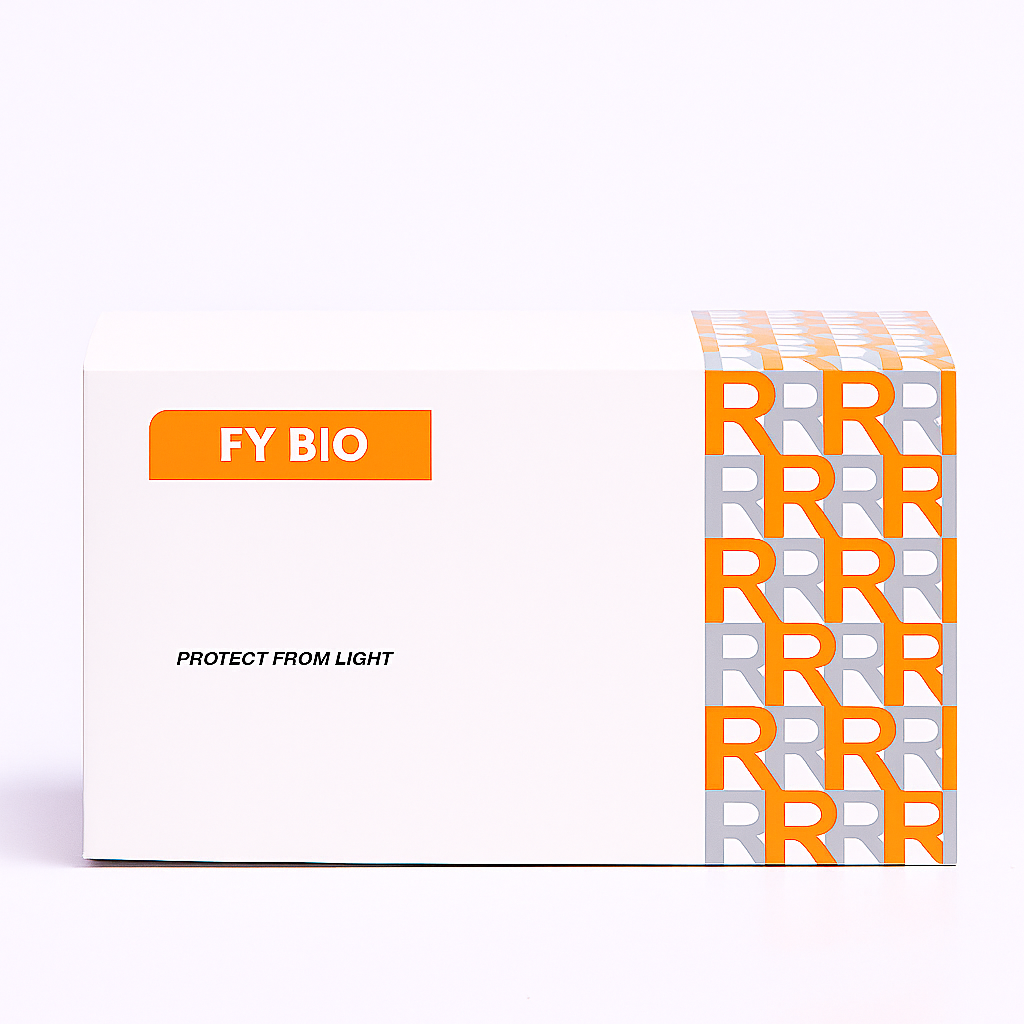
Rhinogen ® FabCOUPER protease packaging specifications are as follows:
|
Catalog Number |
Specification |
concentration |
|
QIP-009-A |
1000U |
20U/μl |
Up to 1 mg of human IgG1 can be digested.
The product is stored in 50 mM Tris-HCl, 150 mM NaCl, 1 mM EDTA, pH 7.6, without added preservatives.
Supporting reagents:
|
Catalog Number |
Reagents |
Element |
|
EB14 |
20× CaCl2 |
200 mM CaCl 2 , pH 7.6 |
Product Source:
Rhinogen ® FabCOUPER protease is recombinantly expressed in E. coli, with a theoretical molecular weight of approximately 71.82KD.
Product Features:
Rhinogen ® FabCOUPER protease is a protease that specifically digests human IgG1 at a single site above the hinge, producing intact Fab and Fc fragments in two hours without reducing conditions. The enzyme is active against antibodies with mutant hinge regions (e.g., LALA mutation).
Enzyme activity definition :
50 mM Tris-HCl, 150 mM NaCl, 10 mM CaCl 2 , pH 7.6, 1 unit of enzyme (1U) can digest ≥90% of 1 µg human IgG1, as confirmed by SDS-PAGE.
Storage conditions:
1. Refrigerated transportation, should be stored at -70℃ - -20℃ upon arrival;
2. Since FabCOUPER protease has self-degradation activity, it should be kept at low temperature after thawing and used on the same day as much as possible. It can also be appropriately divided and frozen to avoid multiple freeze-thaw cycles.
application:
Digestion and structural analysis of mutant antibodies and Fc fusion proteins.
Recommended use:
Experimental preparation:
1. Prepare digestion buffer: 50 mM Tris-HCl, 150 mM NaCl, pH 7.6;
2. Before use, please take out the Rhinogen ® FabCOUPER protease from -20℃ and thaw it, and separate it for later use ;
3. Take out 20×CaCl 2 from -20℃ and thaw it, separate it immediately and set it aside .
Instructions:
1. Adjust human IgG1 to 0.5-5.0 mg/ml using digestion buffer;
Digest at a ratio of 1U FabCOUPER protease/1μg human IgG1, ensuring that the final reaction system contains 10mM CaCl 2 ;
3. Taking the digestion of 100μg human IgG1 (2mg/ml) as an example, add 50μl human IgG1 to the EP tube, add 5μl FabCOUPER protease (20U/μl), add 5μl 20×CaCl 2 , and add 40μl digestion buffer to make up to 100μl;
4. Mix gently and spin down immediately. Incubate at 37℃ for 2 hours.
Notice :
1) Depending on the substrate, it may be necessary to optimize the amount of enzyme and digestion time;
2) The reaction can be scaled up or down linearly;
3) The enzyme solution can be diluted appropriately.
Frequently asked questions
Q1: Can the digestion temperature be adjusted?
A1: The optimum temperature of FabCOUPER protease is 37°C. It also shows activity at 22-30°C. No obvious activity can be detected at 4°C or 55°C.
Q2: How to choose digestion buffer?
A2: Optimal activity is obtained in TBS buffer at pH 7.0-8.5. Other types of buffers may require experimental verification. Buffers containing phosphates should be avoided because phosphate ions will form insoluble calcium phosphate salts together with calcium ions required for enzyme activity.
Q3: Will enzyme self-degradation affect antibody digestion?
A3: Long-term incubation of FabCOUPER protease can lead to complete degradation of the protease, but the degraded enzyme retains its enzymatic activity, and extending the incubation time will not produce nonspecific hydrolysis.