Customer Hotline:
+1 6193853151
 Customer Hotline:
+1 6193853151

Product catalog
Related articles
Detailed Introduction
background:
N-glycosylation and O -glycosylation are two major forms of glycosylation modification. N-linked glycans are connected to the amide side chain of asparagine ( Asn ) residues on proteins with a trimannopentasaccharide core, while O-linked glycans are connected to the hydroxyl side chain of Ser or Thr residues with a disaccharide core of Core 1 or Core 3. The terminal residues on these N- or O-glycan chains are usually sialic acid. The first step in the study of glycosylation of glycoproteins is usually to remove all sialic acid residues at the non-reducing end. α2-3,6,8,9 Neuraminidase can release all sialic acid residues at the non-reducing end of linear or branched chains on glycoproteins, glycolipids, gangliosides and polysaccharides. It is an important tool enzyme for glycosylation research and is widely used in the analysis of glycoproteins and glycolipids.
Rhinogen ® α2-3,6,8,9 Neuraminidase is a recombinant enzyme that is recombinantly expressed in E. coli BL21. The recombinant α2-3,6,8,9 Neuraminidase expressed in the E. coli host without glycosidase background expression is a highly purified enzyme preparation that can release α (2,3)-, α (2,6)-, α (2,8)-, and α (2,9)-sialic acid residues. As shown in Figure 1, the release rate of different sialic acid residues is roughly α (2,6)->α (2,3)->α (2,8)->α (2,9). By adding enough enzyme, the difference in release rate does not affect its property of completely nonspecifically removing sialic acid residues in practical applications.
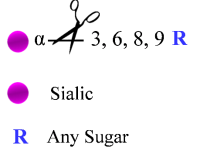
Figure 1. Rhinogen ® α2-3,6,8,9 Neuraminidase action site
Product Packaging:
Rhinogen ® α2-3,6,8,9 Neuraminidase packaging specifications are as follows:
|
Catalog Number |
Specification |
concentration |
|
QPF-005-A |
0.6U/30μl |
20U/ml |
|
QPF-005-B |
5×0.6U/30μl |
20U/ml |
Storage system:
QPF-005 is provided in liquid form in a buffer consisting of 50 mM NaCl, 20 mM Tris-HCl (pH 7.5 at 25°C), and 1 mM EDTA.
Supporting reagents:
Rhinogen ® α2-3,6,8,9 Neuraminidase are as follows:
|
Reagents |
Element |
Specification |
|
10× Glyco Buffer 1 |
50 mM CaCl 2 , 500 mM sodium acetate, pH 5.5 at 25°C |
1ml |
Product Source:
Rhinogen ® α2-3,6,8,9 Neuraminidase is a recombinant enzyme that is produced by recombining the α2-3,6,8,9 Neuraminidase gene and expressing it in E. coli BL21. Its molecular weight is 66KD.
Product quality:
SDS-PAGE analysis showed that the purity was ≥95%; no contaminating exoglycosidase, endoglycosidase and protease activities were detected.
Product Features:
Suitable reaction pH range: 4.5-7, optimal reaction pH: 5.5; heat inactivation conditions: 65°C treatment for 10 min.
Enzyme activity definition :
One unit of enzyme activity is defined as the amount of enzyme required to catalyze the release of 1 μmol of p-nitrophenol within 1 minute using p-nitrophenyl-α-DN-acetylneuraminic acid as substrate at 37°C and pH 5.5.
1U Rhinogen ® α2-3,6,8,9 Neuraminidase =1 U Prozyme Glyko ® Sialidase A TM . For the conversion of enzyme activity units of products from different companies, please refer to the activity unit conversion table as follows:
|
Enzyme |
Company |
Selling Conc. (U/ml) |
Units /Vial |
µl/Vial |
Rhinogen ® Assay (U/ml) |
Rhinogen ® Assay Units /Vial |
µl Conversion (1 Rhinogen ® µl = x Company µls) |
|
α2-3,6,8,9 Neuraminidase |
Rhinogen ® (QPF-005) |
20 |
0.6 |
30 |
20 |
0.6 |
1 |
|
NEB (NEB #P0722) |
20,000 |
800 |
40 |
20 |
0.8 |
1 |
|
|
NEB (NEB #P0720) |
50,000 |
2,000 |
40 |
50 |
2 |
0.4 |
|
|
Prozyme (GKX-5021)α2-3, 6, 8 Neur ) |
5 |
1 |
200 |
10 |
2 |
2 |
|
|
Prozyme (GK80040, α2-3,6,8,9 Neur ) |
5 |
1 |
200 |
5 |
1 |
4 |
Storage conditions:
Store at -20℃ and avoid repeated freezing and thawing.
Features:
Rhinogen ® has the characteristics of high stability and high specific activity. It is a highly purified and very stable exoglycosidase, which is suitable for the effective release of all non-reducing end sialic acid residues on glycoproteins in proteomics and glycobiology research.
1. High purity: no contaminating protease/other glycosidase, purity ≥95%;
2. High stability: Each batch of α2-3,6,8,9 Neuraminidase products undergoes strict quality control to achieve high stability;
3. High specific activity: Effectively and completely releases all non-reducing terminal sialic acid residues.
application:
1. Glycan structure analysis;
2. Pathophysiological studies involving sialic acid;
3. Characterization and quality control of therapeutic recombinant proteins;
4. Cancer research and identification and in vitro diagnosis of abnormal sialylation;
5. Eliminate glycoprotein heterogeneity.
Frequently asked questions
Q1: There are many types of sialidases. What is the difference between Rhinogen® sialidases and those on the market?
A1: There are four common sialidases on the market: α2-3, α2-3,6-, α2-3,6,8- and α2-3,6,8,9-. 1) α2-3 Neuraminidase can cleave and release α2-3 linked sialic acid residues; 2) α2-3, 6 Neuraminidase can cleave and release α2-3, α2-6 linked sialic acid residues; 3) α2-3,6,8 Neuraminidase can cleave and release α2-3, α2-6, α2-8 linked sialic acid residues; 4) α2-3,6,8,9 Neuraminidase can cleave and release α2-3, α2-6, α2-8, α2-9 linked sialic acid residues. It can also cleave branched sialic acid residues connected to internal residues. Rhinogen® currently has only this type of sialidase, which is the most widely used and more applicable enzyme.
Q2: What is an effective positive control substrate for α2-3,6,8,9 Neuraminidase?
A2: Fetuin or pNP -N-acetylneuraminic acid is an effective positive control substrate for α2-3,6,8,9 Neuraminidase.
Q3: Can α2-3,6,8,9 Neuraminidase be used for double digestion with other exoglycosidases and/or endoglycosidases?
A3: Yes, they can be used simultaneously. When used with other exoglycosidases, it is recommended to use 1× Glyco buffer 1 (50 mM sodium acetate, 5 mM CaCl 2, pH 5.5) buffer system; when used with PNGase F and/or O-Glycosidase, it is recommended to use 1× Glyco buffer 2 (50 mM sodium phosphate, pH 7.5).
Q4: Is it necessary to treat glycoprotein samples with Neuraminidase and O-Glycosidase at the same time?
A4: Yes, for glycoprotein samples containing O-glycan chains, the terminal sialic acid residues must be removed first before O-Glycosidase can effectively remove the O-linked disaccharide core.
Q5: Does Neuraminidase require denaturing conditions for desialylation of glycoprotein samples?
A5: No, usually deglycosylation enzymes can remove glycan residues from native (folded) glycoproteins. However, due to steric hindrance (secondary or tertiary structure of the protein), the proteins around the glycan site may affect the accessibility of some enzymes. For PNGase F and O-Glycosidase, the deglycosylation efficiency will be greatly improved under denaturing conditions. However, for Neuraminidase, the efficiency of desialylation is not much different under denatured and native conditions.
Q6: How to re-purify glycans or glycopeptides after glycosidase treatment?
A6: Microcentrifugal filter collection or solid phase extraction (e.g. graphitized carbon column).
Q7: Can Rhinogen ® α 2-3,6,8,9 Neuraminidase cleave and release N-acetylneuraminic acid (Neu5Ac) and N-glycolylneuraminic acid (Neu5Gc) residues?
A7: Rhinogen ® α2-3,6,8,9 Neuraminidase can cleave both Neu5Ac and Neu5Gc, but its cleavage efficiency for Neu5Gc is slightly lower than that for Neu5Ac.