Customer Hotline:
+1 6193853151
 Customer Hotline:
+1 6193853151

Product catalog
Related articles
Detailed Introduction
background:
Among clinical infusion reactions, pyrogenic reactions are the most harmful and have the highest incidence. Endotoxin (i.e., lipopolysaccharide molecules in the cell walls of Gram-negative bacteria, LPS) is the most thoroughly studied and most common biological pyrogen. Injection of even trace amounts of LPS at the pg level can cause severe pyrogenic reactions in patients, causing fever, shock, and even death. Endotoxins are ubiquitous and difficult to inactivate, which is a challenge for the pharmaceutical and medical device industries. Therefore, sensitive and reliable endotoxin analysis technology is very necessary.
The amoebocytes of horseshoe crabs are highly sensitive to LPS. The endotoxin detection method of horseshoe crab reagents made from the lysate of horseshoe crab blood amoebocytes has been used in the medical field since the mid-1970s and was soon widely adopted by countries around the world. The Chinese Pharmacopoeia and the European and American Pharmacopoeia have designated it as a legal bacterial endotoxin test method. After decades of development and improvement, the endotoxin detection method of horseshoe crab reagents has been applied to pharmaceuticals, medical devices, non-oral preparations, pharmaceutical products, biological preparations, water quality, food testing, and scientific research.
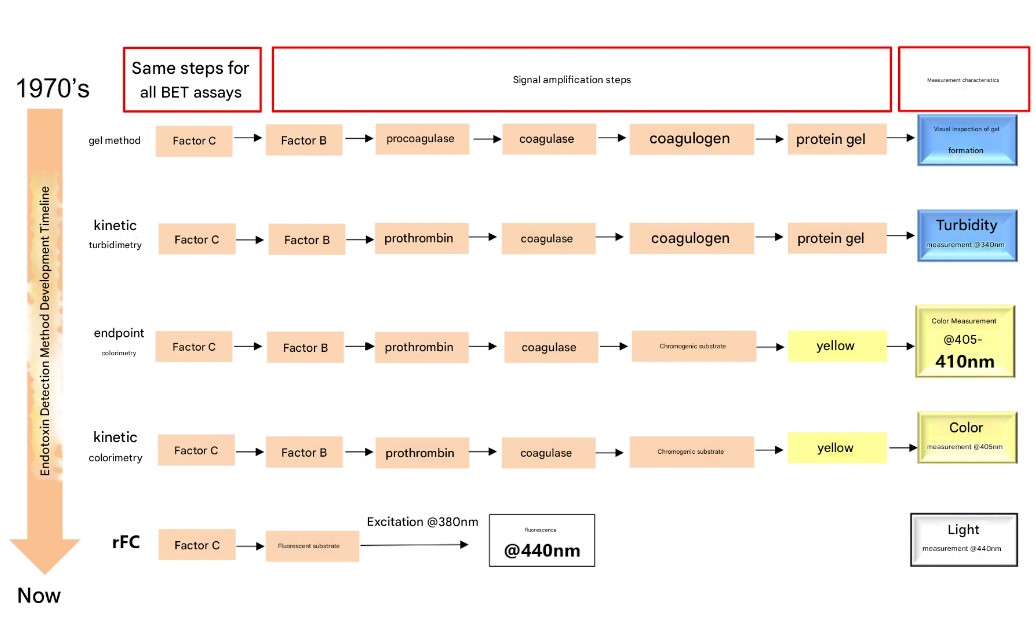
Figure 1. Development and improvement history of the horseshoe crab test method
Using the complex components of horseshoe crab blood cell lysate as the reaction raw material has insurmountable defects. For example:
1. Non-specific interference problem: In addition to reacting with endotoxin, the horseshoe crab reagent can also react with (1-3)-β-D-glucan, resulting in false positive results;
2. Batch stability issues: Horseshoe crab reagents use horseshoe crab blood as raw material. Due to seasonal and regional differences, batch differences in horseshoe crab reagents are common.
3. Ecological protection needs for horseshoe crab resources: Environmental pollution and other reasons have caused a decrease in the number of horseshoe crabs in the ocean , making it increasingly difficult to obtain raw materials;
4. The imbalance between the growing demand of the pharmaceutical industry and the limited horseshoe crab resources: With the rapid growth of demand for human and animal injectable drugs (such as chemicals, radioactive drugs, antibiotics, biological products, etc.) and medical devices (such as dialysis fluid, implantable devices, etc.).
Therefore, it is becoming increasingly important to develop alternative methods for the rapid and reliable quantitative detection of endotoxins.
Overview:
Horseshoe crab factor C is a serine protease that is sensitive to bacterial endotoxins in horseshoe crab blood cells. In the horseshoe crab blood coagulation system reaction mediated by bacterial endotoxins, horseshoe crab factor C is the first to be activated by endotoxins and initiates the blood coagulation cascade reaction in the entire horseshoe crab blood cells. Rhinogen ® recombinant factor C is a genetically recombinant expression of the eastern horseshoe crab ( Tachypleus tridentatus ) Recombinant Factor C ( rFC ), which is activated by endotoxin, can cleave the substrate to obtain free fluorescent groups. The release of fluorescent groups is proportional to the concentration of endotoxin, so that endotoxin can be quantitatively detected. Compared with the classic horseshoe crab reagent endotoxin detection method, the recombinant factor C endotoxin detection method has higher specificity, better specificity, precision, accuracy, linear range and quantitative limit, and is an improved method of the current horseshoe crab reagent endotoxin detection method.
Product Packaging:
the Rhinogen ® Recombinant Factor C Endotoxin Detection Kit are as follows:
Note: This kit
contains enough reagents to perform 96 tests (96-well plate: 100 μl/well/test)
|
name |
Part Number |
Specification |
|
Rhinogen ® Recombinant Factor C Endotoxin Detection Kit |
RAF-02 |
96 tests |
|
Kit Components: |
||
|
• Fluorescent substrate reagents |
6ml |
|
|
•Assay buffer |
5ml |
|
|
• rFC enzyme solution |
0.6ml×2 |
|
|
• Pyrogen-free water |
30ml |
|
|
•96-well flat-bottom removable well plate (white bottom and transparent cover) |
1 |
|
Storage conditions:
Transported in ice packs. After receiving the test kit, please store it immediately at 2℃-8℃. The shelf life of unopened products is 12 months.
Product Features:
Rhinogen ® Recombinant Factor C Endotoxin Assay Kit is an endotoxin assay reagent that does not rely on animal-derived components, has high sensitivity, high specificity, and can be stably and continuously provided as an alternative to the horseshoe crab reagent. It has the following characteristics:
1. Single-step, end-point fluorescence assay;
2. The detection time is only 90 minutes;
3. rFC liquid reagent, more convenient to operate;
4. Detection in a standard 96-well plate, easy to operate and high throughput;
5. Wide sensitivity range: 0.005EU/ml~5EU/ml;
6. Endotoxin specificity, no G factor bypass interference, avoiding false positive results;
7. Eliminates dependence on animal-derived reagents and complies with the 3R substitution principle, providing higher supply security
8. Recombinant expression production, product batch consistency is good.
9. This kit can replace the traditional horseshoe crab reagent for the endotoxin detection of raw materials, auxiliary materials, intermediate products and released products of human and animal injectable drugs (such as chemicals, radiopharmaceuticals, antibiotics, biological products, etc.) and medical devices (such as dialysate, implantable devices, etc.).
Frequently asked questions
Q1: No signal in sample detection
A1:
|
reason |
Effective solutions |
|
Pipetting errors |
Retest |
|
Interference |
in the pre-experiment or each experiment is unqualified, indicating interference. Dilute or exclude the sample. |
|
Inappropriate pH |
Check the pH value of the sample and adjust it to a neutral range of 6-8 |
Q2: Low signal strength
A2:
|
reason |
Effective solutions |
|
Instrument sensitivity (gain) is too low |
To increase sensitivity, higher gain is required |
|
The microplate reader detection parameters are set incorrectly (e.g., optics) |
Check the running instrument setting parameters |
|
Incubation temperature is too high/too low |
Check and calibrate temperature |
|
Reagent failure (transportation or storage) or expiration |
Check storage conditions and packaging materials; contact technical service to use new kit or new reagents |
High background signal in standard and negative control wells
A3:
|
reason |
Effective solutions |
|
LPS contamination assay components (substrate reagent, assay buffer or rFC enzyme solution) |
When using newly opened reagents, be sure to use sterile, pyrogen-free tips |
Q4: Linearity of standard curve R 2 <0.98
A4:
|
reason |
Effective solutions |
|
Endotoxin working standard solution dilution error |
Re-dilution accurately |
|
The low sensitivity of the fluorescence detection of the microplate reader causes the fluorescence value at 5EU/ml to exceed the instrument's detection range |
Use a microplate reader with high fluorescence detection sensitivity |